
Will AI Replace Doctors?

by Caroline Reiner
Feb 2, 2023
Artificial Intelligence (AI) in healthcare has grown tremendously through advancements in diagnostic imaging, personalized medicine, drug discovery, virtual assistants, and surgical robotics. As AI in healthcare evolves, it raises concerns if it will eventually replace physicians. Although AI has advantages, it could cross ethical and legal boundaries that we deem are inappropriate for our society. It is crucial that we consider these challenges and implications in the healthcare industry.
The AI revolution that we’ve dreamed of is finally here!
Machines are predicted to outsmart humans by the mid-21st century. In his book The Singularity Is Near, Raymond Kurzweil discusses the point at which AI will surpass our intelligence and impact our society as a whole. Now, with the rapid growth and success of AI, Kurzeweil’s predictions look spot on.
In healthcare, AI has been instrumental in assisting medical professionals in improving their patients’ care. For example, biopharmaceutical research has previously been tedious and expensive. From the initial research phase to FDA approval, scientists must go through various phases: drug discovery, pre-clinical trials and then multiple phases of clinical trials. Drugs are evaluated as to how they react in the lab, with other drugs, and with humans before going into clinical testing trials. By augmenting AI, drugs can now be prescreened to identify safe candidates and reduce the need for costly and time-consuming testing. Additionally, AI can find novel uses for previously tested drugs and create personalized medicine based on genetic markers. For example, researchers have been using machine learning to analyze past cancer clinical trials to identify drugs for cancer treatment.
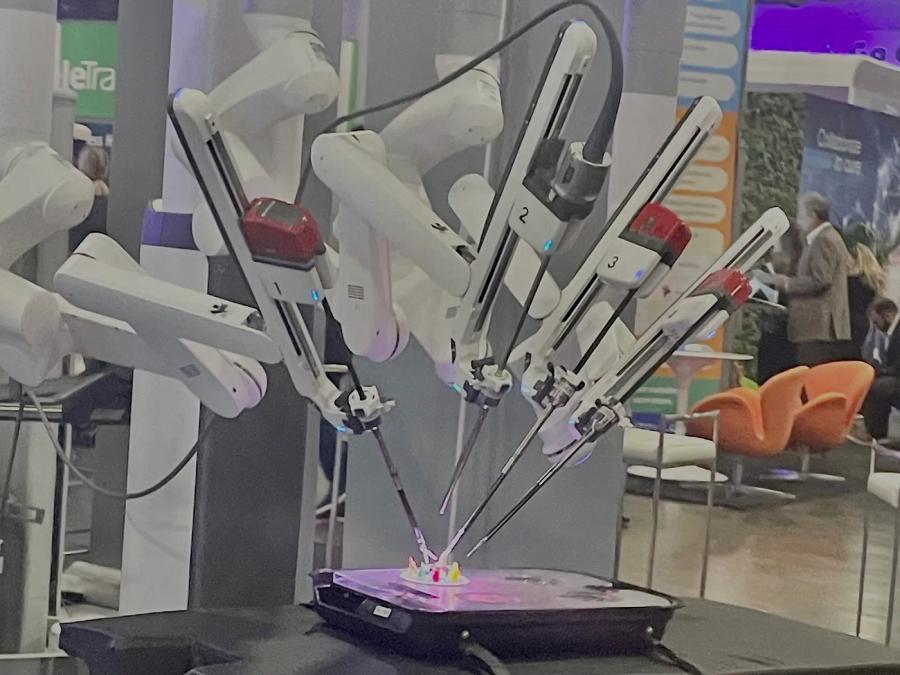
AI has begun to soar in surgical specialties
Da Vinici, the first successful surgical robot, was developed by Intuitive Robotics and approved by the FDA in 2000. Da Vinci allows a surgeon to move robotic arms to perform urologic, gynecologic, general, thoracic, and cardiac surgeries better. The robotic arms enable improved precision and dexterity, and reduce fatigue of the surgeon. Da Vinci positively affects the patient by reducing blood loss, decreasing scarring, and expediting recovery times. Another popular robotic system includes Mako by Stryker, providing similar benefits.
In 2016, the AI program AlphaGo beat the human champion in an extremely complex board game, Go, demonstrating that machine learning had the capability to make strategic decisions and do better than the best human players in the world. Yet, AI still struggles to compete in open-world games such Grand Theft Auto. The non-linear environment of open-world games is still too challenging for AI for quick adaptation. Similarly, a surgeon must adapt to unexpected events, changes in patient anatomy, and react quickly to unexpected complications. If an AI is presented with a completely novel scenario in the operating room, it is uncertain how it will react. Should life or death decisions be allowed when the outcomes are unknown?
The emerging market of personalized health tracking
In the early 2000’s, wearable devices such as fitness trackers and smartwatches began to take off, allowing consumers to track heart rate, sleep, and other aspects of their health. So, could a smartwatch replace a physician? Imagine an emotionless Siri responding to your questions about your heart palpitations with no voice intonations or empathy. Clinicians’ empathy is essential for patient care. Studies have shown how patients can be reticent to reveal information at first, and then will proceed to disclose accurate histories about themselves based on how they perceive the emotional empathy of their physicians. With increased trust in a physician comes increased adherence to treatment. Furthermore, it has been shown that patients who feel supported by physicians when they are discussing bad news seem to cope better and take further steps to seek treatment and support groups. Clearly there are benefits based on physician-patient interactions. A large push towards improving Artificial Empathy (AE) has been made, however, it’ll be quite some time till we have Westworld level AI where we can’t tell the emotional cognitive difference between a robot and human….and is this something society desires?
In conclusion, AI in healthcare and medicine is revolutionizing the way we approach patient care and drug discovery. However, as with any major technical advancement, it is imperative we consider the ethical and legal ramifications of AI. The rapid growth of AI in healthcare has sparked concerns about its effect on the industry. While AI can aid medical professionals by enhancing patient care and reducing physician workloads, it is not yet sophisticated enough to replace doctors. And even if it could, would we want our health in the hands of our new AI overlords?

Abstractive Health provides an automated narrative summary of the medical record as a software solution for healthcare. We use a natural language processing algorithm to summarize the clinical notes in the patient chart. We currently have a partnership with Weill Cornell where we are demonstrating the clinical quality of our automated hospital summaries compared to the hospital course section of the Discharge Summary.
Related Articles

See the Abstractive Health AI assistant in action to discover what real efficiency can look like.
Try for freeStay ahead of the curve in healthcare innovation.
Connect
Abstractive Health
Resources
©2026 Abstractive Health. All Rights Reserved.